Rose Meaning & Colours: Which Rose to Gift, and When
Gulab · Cabbage rose · Hundred-petalled rose
Botanical name: Rosa × centifolia · Family: Rosaceae
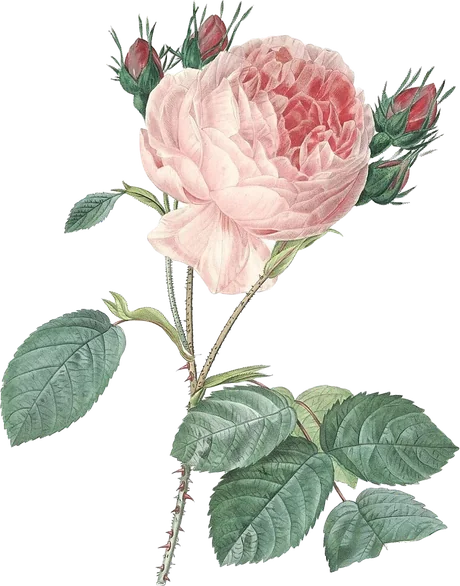
The rose is the flower most of the world reaches for when words aren't enough. The one pictured here is the cabbage rose, packed with so many petals it was once called the hundred-petalled rose.
Create a bouquet with roses →Ready in a minute — just add your message.
What it means
Each colour says something different. Red stands for romantic love, pink for gratitude and admiration, white for respect, new beginnings or remembrance, and yellow for friendship and joy. A single rose says "you", and a full bouquet says "all of it".
What the colours mean
- Red — romantic love and devotion
- Pink — admiration, affection and thanks
- White — respect, remembrance and new beginnings
- Yellow — friendship, warmth and joy
- Orange — enthusiasm and attraction
When to give it
- Rose Day (7 February) and Valentine's Day
- Anniversaries
- Birthdays
- To say thank you
- White roses to show sympathy
Perfect for:
Who should you give it to?
- A partner or spouse
- A close friend
- Parents and mentors
- Someone beginning a new chapter
When not to give it
- Red roses for a friend or colleague. In India especially, a red rose is read as romantic.
- An all-white bouquet for a celebration. White flowers are linked with condolence in many Indian families.
- Yellow roses alone for a partner on Valentine's week, which can read as "just friends".
Short messages to send with it
Where it grows
Wild roses grow across the Northern Hemisphere, but most of them come from Asia. The cabbage rose itself was bred by Dutch growers in the 17th and 18th centuries, and it is still grown around Grasse in southern France for perfume. Roses like sun, rich soil and cool nights, and they flower most in spring and autumn.
How it came to India
Roses did not arrive in India in one recorded shipment. Wild rose relatives occur across Asia, while fragrant garden roses moved for centuries through Persian, Central Asian and Indian trade and courtly garden networks. By the Mughal period, roses were firmly established in formal gardens, perfume making, food and ceremony. European breeders later introduced many modern garden classes, and Indian horticulturists—including the influential rose breeder Dr B. P. Pal—developed varieties suited to local climates. The rose seen in India today is therefore the result of several waves of cultivation rather than one simple arrival story.
Where to find it in India
Roses grow all over India, and in the plains they bloom best from October to March. Pushkar in Rajasthan is famous for small, fragrant roses that become gulkand and rose water, and Kannauj distils them into attar. Around Pune and Bengaluru, greenhouse farms grow cut roses for weddings and for export. The Zakir Hussain Rose Garden in Chandigarh is one of the largest rose gardens in Asia.
Season and blooming time
In India, roses are at their best through the cooler months, usually from October to March. In temperate gardens their main flush begins in late spring, with repeat-flowering varieties continuing into autumn.
In culture
Rose water flavours Indian sweets from gulab jamun to kheer, and Mughal gardens were planted around roses. Jawaharlal Nehru famously wore a red rose in his buttonhole. Elsewhere the rose is the national flower of England and the floral emblem of the United States.
History and symbolism
Roses have represented love and beauty for thousands of years, from ancient Persian gardens to Greek and Roman stories. Sufi poets used the rose as an image of divine love, while Victorian flower language made each colour a more specific message.
The story behind this flower
In Greek mythology, Aphrodite was the goddess of love and beauty, while Adonis was a mortal prince and hunter famed for his extraordinary beauty. Different ancient writers tell their meeting differently, but they agree that Aphrodite loved him deeply. She preferred being with Adonis in the forests to remaining among the gods, and she warned him not to challenge wild animals that did not turn and flee. Adonis was fearless, however, and continued to hunt. One day a wild boar charged him and drove its tusk into his body. Some versions say the attack was an accident; others make the boar part of a divine rivalry. Hearing Adonis cry out, Aphrodite ran barefoot through thorny bushes to reach him. The thorns tore her skin, and drops of her blood fell on pale roses beside the path. In a later and especially popular retelling, the petals turned deep red, creating a lasting emblem of passionate love and sacrifice. Ancient sources more often say that an anemone sprang from Adonis’s own blood, so the rose detail belongs to one branch of a story that changed as it travelled. Aphrodite could not save the mortal she loved, but the flowers preserved his memory. This is why the red rose can carry two feelings at once: the beauty of wholehearted love and the pain that comes from having something precious to lose.
Indian tradition
There is no widely attested ancient Hindu origin myth for the garden rose comparable to the Greek story of Aphrodite and Adonis. Its Indian importance comes instead from living devotional and cultural traditions. In Braj, the sacred landscape associated with Radha and Krishna, roses are among the fragrant spring flowers used in gardens and in thakur seva, the daily care, offering and adornment of the deity. Roses also became deeply woven into Indo-Persian courtly and Sufi culture: rose gardens represented beauty and paradise, while the flower’s fragrance became an image for divine love and the seeker’s longing. Mughal gardens, rose water, attar and sweets such as gulkand carried that association into everyday life. So the rose’s Indian story should not be presented as a fabricated Puranic legend. Its authentic story is how a flower arriving through centuries of cultivation became part of worship, poetry, perfume, hospitality and love across the subcontinent.
Did you know?
- There are more than 300 wild species of rose, and many thousands of garden varieties.
- Rose hips, the fruit left after the flower, are rich in vitamin C.
- Gulkand, a sweet preserve of rose petals, is eaten in India as a summer cooler.
Questions
What does a red rose mean?
Romantic love and passion. It is the classic flower for a partner on Valentine's Day, Rose Day or an anniversary.
Which rose should I give a friend?
Yellow roses mean friendship and joy; pink ones mean thanks and admiration. Both carry no romantic message.
Can I give roses on a birthday?
Yes. Pink or yellow roses suit almost anyone; red only for a partner.
What do white roses mean?
Respect, remembrance and new beginnings. They suit weddings and sympathy, but can feel sombre at a party.
When is Rose Day?
On 7 February, the first day of Valentine's week, widely celebrated in India.
Other flowers





Illustration: Pierre-Joseph Redouté, Choix des plus belles fleurs (1827), plate 79. Public domain.