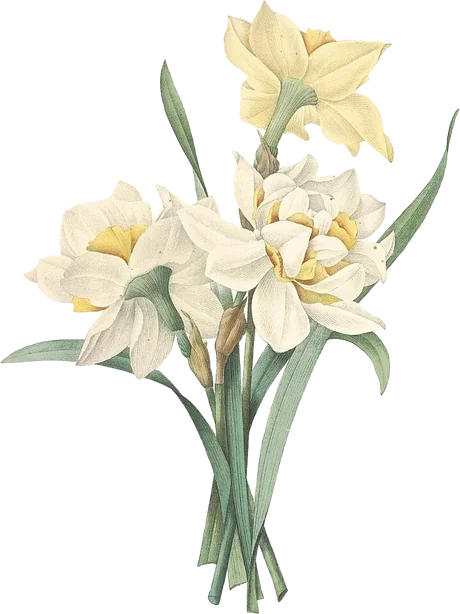
Narcissus (Nargis) Meaning: The Flower of New Beginnings
Nargis · Daffodil · Yemberzal (Kashmiri)
Botanical name: Narcissus · Family: Amaryllidaceae
The narcissus is one of the first flowers of spring, which makes it a natural symbol of hope and new beginnings. In Urdu and Persian poetry it is the beloved nargis.
Create a bouquet with narcissus →Ready in a minute — just add your message.
What it means
Narcissus and daffodils stand for new beginnings, rebirth and spring. The name comes from the Greek myth of Narcissus, the young man who fell in love with his own reflection, so it can also hint at vanity. As a gift it almost always means "a fresh start".
What the colours mean
- Yellow — hope, cheerfulness and friendship
- White — renewal, sincerity and quiet beauty
- Orange-centred — energy and creative confidence
- Bi-coloured — change, possibility and fresh perspective
When to give it
- A new job or a fresh start
- Spring festivals and Nowruz
- Wedding anniversaries (the traditional 10th)
- Cheering someone up after a hard winter
- Housewarming
Perfect for:
Who should you give it to?
- Someone starting again
- A friend who needs hope
- A person with a spring birthday
- Someone celebrating a creative achievement
When not to give it
- Homes with small children or pets. Every part of the plant is poisonous if eaten.
- Mixing fresh daffodils into a vase with other flowers. Their sap makes the others wilt.
Short messages to send with it
Where it grows
Narcissus grows wild around the Mediterranean, and most species come from Spain and Portugal. Others are native to North Africa and western Asia. They grow from bulbs that rest underground through the summer and send up flowers as winter ends.
How it came to India
Narcissus species come mainly from Europe, North Africa and western Asia. The cultivated bulbs reached Indian gardens through older West Asian garden connections and, later, European nursery and colonial hill-garden networks. No single well-supported first-arrival date is known. Because the plant needs a cool season, it became most comfortable in North Indian winter gardens and Himalayan towns. Bulbs could be lifted, stored and exchanged, which helped named varieties circulate among botanical gardens, nurseries and private growers without leaving one clear historical starting point.
Where to find it in India
In Kashmir the narcissus is called yemberzal, and it is one of the first flowers to bloom as the snow melts, often by early March. It also grows in other Himalayan areas and in hill-station gardens. In the plains it can be grown as a winter bulb in pots.
Season and blooming time
Narcissus is a cool-season bulb, flowering from late winter into spring. In North Indian plains it is planted in autumn for winter bloom, while cooler hill areas enjoy flowers later in spring.
In culture
Allama Iqbal wrote: "Hazaron saal nargis apni be-noori pe roti hai, badi mushkil se hota hai chaman mein deedavar paida." The narcissus weeps a thousand years over its lack of sight, because someone who can truly see is rarely born. The daffodil is a national emblem of Wales, and in China the sweetly scented narcissus is grown for the Lunar New Year.
History and symbolism
Its name is tied to the Greek story of Narcissus, but the flower also became a positive emblem of rebirth because it returns at winter’s end. In Persian and South Asian poetry, the narcissus is often compared to a beautiful, watchful eye.
The story behind this flower
Narcissus was a beautiful young hunter in Greek mythology, admired by many people but unwilling to return their affection. One of them was Echo, a mountain nymph who had been cursed so that she could repeat only the final words spoken by someone else. She tried to reveal her love, but Narcissus rejected her, and Echo faded until only her voice remained. The goddess Nemesis, who punished excessive pride, then led Narcissus to a clear pool. When he bent to drink, he saw a beautiful face in the water and fell hopelessly in love with it, not understanding at first that it was his own reflection. He could neither possess the image nor persuade himself to leave it. He remained beside the pool, weakening with longing, until he died or transformed; storytellers give both endings. In his place appeared a flower bending its head toward the water. The legend made narcissus a warning about vanity and love that sees only itself. Yet the real flower returns near the end of winter, so it also gained a more hopeful meaning: rebirth, awakening and the possibility of change. Giving narcissus can therefore carry a gentle message—not “admire yourself,” but look beyond yourself and begin again.
Did you know?
- Every part of the plant is poisonous if eaten.
- Freshly cut daffodils release a sap that can make other flowers in the same vase wilt.
- "Daffodil" is the common English name for the larger trumpet-flowered kinds of narcissus.
Questions
What does a narcissus flower mean?
New beginnings, rebirth and the arrival of spring.
Is nargis the same as narcissus?
Yes. Nargis is the Persian and Urdu name for narcissus.
When should I give narcissus?
For a new job, a fresh start, a new home, Nowruz, or a 10th wedding anniversary.
Does narcissus mean vanity?
The Greek myth links the name with self-love, but as a gift it almost always means a fresh start.
Where does narcissus grow in India?
Mainly in Kashmir, where it is called yemberzal and blooms in early spring.
Other flowers



Illustration: Pierre-Joseph Redouté, Choix des plus belles fleurs (1827), plate 113. Public domain.