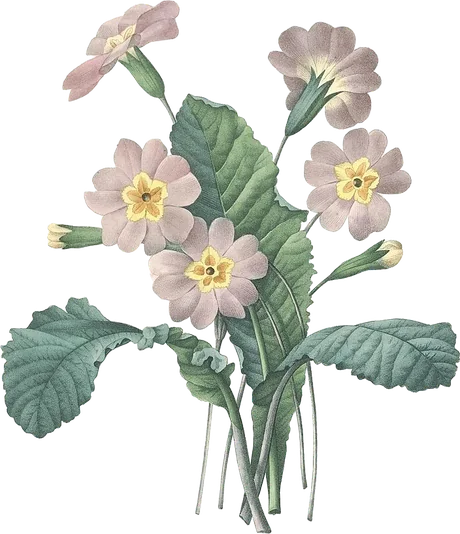
Primrose Meaning: Youth, Hope and New Beginnings
Common primrose · Primula
Botanical name: Primula vulgaris · Family: Primulaceae
The primrose is one of the first flowers to open each spring, and its name comes from prima rosa, "the first rose". Soft, low and cheerful, it is the flower of youth and new beginnings.
Create a bouquet with primroses →Ready in a minute — just add your message.
What it means
Primroses stand for youth, young love and new beginnings. They come up while it is still cold, so they also mean hope and the promise of better days.
What the colours mean
- Yellow — youth, optimism and natural happiness
- Pink — tender affection
- White — innocence and remembrance
- Purple — confidence and imagination
- Red — heartfelt love
When to give it
- A new baby
- Spring and new beginnings
- Cheering someone up
- Young love
- A first home
Perfect for:
Who should you give it to?
- A young love
- Someone celebrating a spring birthday
- A friend beginning something new
- A person who enjoys cottage-garden flowers
When not to give it
- As the centrepiece of a grand romantic gesture. It is sweet and modest; pair it with roses.
- Sympathy bouquets. Its cheerful spring meaning feels out of place.
Short messages to send with it
Where it grows
The common primrose grows wild in woodland edges and hedgerows across western and southern Europe, with some in north-west Africa and western Asia. It likes damp, shady spots and flowers as early as late winter.
How it came to India
The common primrose, Primula vulgaris, is native from Europe towards western Asia and is not the same as India’s native Himalayan primulas. European garden forms reached India through seed catalogues, nurseries and temperate botanical collections, especially in hill stations where the climate suited them. There is no trustworthy single arrival date. The distinction matters: India has its own rich Primula diversity in the Himalayas, while the familiar low, yellow common primrose on this page represents a foreign species grown as a cool-season ornamental.
Where to find it in India
The Himalaya is one of the world's great homes of primulas. Dozens of wild species grow in Kashmir, Himachal, Uttarakhand and Sikkim. The drumstick primula, with its round purple heads, covers hill slopes in spring. In the plains, garden primulas are sold as winter flowers for pots.
Season and blooming time
Primroses are cool-season flowers. They bloom from late winter through spring in temperate climates and do best in India’s hills or as winter annuals where summers are too hot.
In culture
In Britain, 19 April is Primrose Day, the anniversary of the death of Prime Minister Benjamin Disraeli, whose favourite flower it was. Shakespeare wrote of "the primrose path of dalliance", meaning an easy, pleasant road.
History and symbolism
The name comes from the Latin prima rosa, meaning “first rose,” because it is among the first flowers of spring. European folklore treated it as a key to fairy doors, while flower language used it to express young love and the feeling “I cannot live without you.”
The story behind this flower
A medieval European legend explains why the common primrose was sometimes called “the keys of heaven.” Saint Peter was imagined as the keeper of heaven’s gate, carrying a heavy ring of golden keys. One day he heard a rumour that someone had made a duplicate key and intended to enter without permission. Startled, Peter dropped his own keys from the sky. They fell to the earth, and a cluster of yellow flowers sprang up at the place where they landed. The flowers resembled a ring of small golden keys, so people called them “herb Peter,” “Peter’s keys,” or keys of heaven. This is Christian folklore, not a story found in the Bible, and versions differ across European regions. It grew naturally from the flower’s appearance and its habit of opening the spring season. Long before modern calendars made seasonal change feel predictable, the first primroses were a reassuring sign that winter’s locked door was opening. Other folk traditions imagined primroses marking entrances to the fairy world, giving the little flower another connection with doors and hidden places. Both stories share the same idea: primrose is a key between one state and another—winter and spring, the ordinary world and the enchanted one, or a difficult past and a hopeful beginning.
Did you know?
- Primroses come in two flower forms, "pin" and "thrum", which encourage cross-pollination. Charles Darwin studied them in detail.
- The name comes from the Latin prima rosa, "first rose", though it is not related to roses.
- The Himalaya holds a large share of the world's primula species.
Questions
What does a primrose mean?
Youth, young love and new beginnings.
Is a primrose good for a new baby?
Yes. Its name means "first rose", which makes it perfect for a newborn.
Do primroses grow in India?
Yes. Dozens of wild primulas grow in the Himalaya, and garden primroses are winter flowers.
Is a primrose a rose?
No. It belongs to the primula family; the name just means "first rose".
What is Primrose Day?
19 April in Britain, the anniversary of Benjamin Disraeli's death.
Other flowers

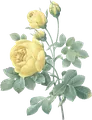
Illustration: Pierre-Joseph Redouté, Choix des plus belles fleurs (1827), plate 95. Public domain.