Auricula Meaning: A Flower for Artists and Makers
Bear's ears · Oreilles d'ours
Botanical name: Primula auricula · Family: Primulaceae
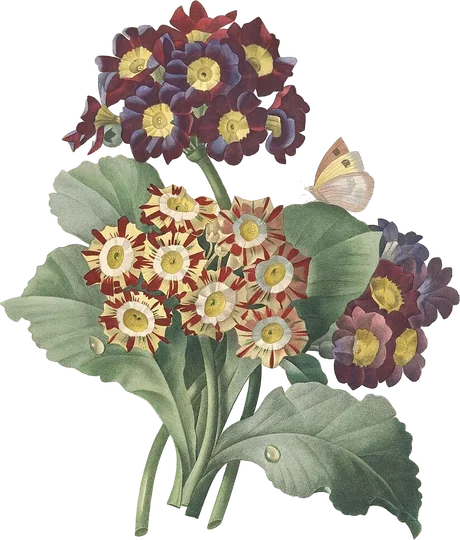
The auricula looks almost painted: velvety rings of colour around a white or yellow eye, often dusted with a fine white powder. For three centuries it has been a collector's flower.
Create a bouquet with auriculas →Ready in a minute — just add your message.
What it means
In the Victorian language of flowers the auricula meant "painting", a nod to its artist-perfect colours. It suits anyone who notices detail and cares about craft.
What the colours mean
- Purple — dignity and imagination
- Yellow — optimism and warmth
- Red — bold affection
- White-edged forms — rarity and refined beauty
- Multi-coloured forms — individuality and joyful surprise
When to give it
- To an artist or designer
- To a teacher or mentor
- Congratulations on finished work
- To someone who loves gardening
- An unusual birthday surprise
Perfect for:
Who should you give it to?
- A collector or design lover
- Someone proudly unconventional
- A person celebrating skilled work
- A friend who loves rare plants
When not to give it
- A bold romantic message. The auricula honours skill, not passion.
- Expecting to buy fresh auriculas in India. They are rare even in the hills.
Short messages to send with it
Where it grows
The auricula is a primula of the European mountains, growing wild on rocky limestone ledges in the Alps. Its thick, rounded leaves gave it the name "bear's ears". Garden auriculas are hybrids that collectors have bred since the 17th century.
How it came to India
Auricula originated in the European Alps and became a highly specialised collectors’ flower in Britain and continental Europe. It came to India through imported seed, nursery plants and the gardening culture of cool hill stations rather than through an ancient migration or sacred tradition. Because auriculas dislike hot, humid plains, they never spread as widely as roses or periwinkles. Indian gardeners who grow them usually depend on cool conditions, careful pot culture and specialist planting material. No reliable source identifies a single first introduction.
Where to find it in India
Auriculas need cool summers and are rarely grown in India, apart from a few enthusiasts' collections in the hills. India's Himalaya is home to many of the auricula's wild primula cousins.
Season and blooming time
Auriculas bloom in spring after cool winter growth. They dislike intense heat and humidity, so they suit alpine climates, cool greenhouses and India’s higher hill stations better than tropical plains.
In culture
In 18th- and 19th-century England, "florists' societies" held auricula shows, and collectors displayed their best plants on tiered shelves against black backgrounds called auricula theatres. Some still exist today.
History and symbolism
Auriculas became collector’s treasures in Europe during the 17th and 18th centuries. Working people in northern England formed “florist societies” to exhibit perfectly patterned blooms, turning the flower into a symbol of craftsmanship, individuality and pride.
The story behind this flower
In 17th- and 18th-century England, the auricula became an obsession. Clubs called florists' societies held "florists' feasts", where members competed to show the most perfect flowers, and many of the keenest growers were weavers and craftsmen in the industrial north, people who valued precision in their own work. The judging was strict: the white ring had to be perfectly round, the edges crisp, the colours clean. To show off their best plants, growers built auricula theatres, tiered shelves painted black inside, often with a little roof to keep rain off the delicate powdery farina. Plants were moved on and off the "stage" as they came into bloom. A few theatres survive, including a famous one at Calke Abbey in Derbyshire, still filled with auriculas every spring. So the auricula is a flower that has always been about care and patience, the reason it suits anyone who takes pride in making something well.
Did you know?
- The white powder on many auriculas is called farina. It is easily smudged by touch or rain.
- Show auriculas are often grown under cover to keep the farina perfect.
- Auriculas belong to the same genus as primroses.
Questions
What does an auricula mean?
In Victorian flower language, "painting": a tribute to artistry and craft.
Who should I give an auricula to?
An artist, designer, teacher or anyone whose careful work you admire.
Why is it called bear's ears?
Because of its thick, rounded leaves.
What is an auricula theatre?
A tiered shelf with a dark background used to display prize auriculas, popular in 18th- and 19th-century England.
Is the auricula related to the primrose?
Yes. Both are primulas.
Other flowers






Illustration: Pierre-Joseph Redouté, Choix des plus belles fleurs (1827), plate 139. Public domain.