
Bellflower Meaning: Gratitude and Constancy
Campanula · Harebell · Canterbury bells
Botanical name: Campanula · Family: Campanulaceae
Delicate blue bells nodding on thin stems: Campanula simply means "little bell" in Latin. It is a quiet, grateful sort of flower.
Create a bouquet with bellflowers →Ready in a minute — just add your message.
What it means
Bellflowers stand for gratitude, constancy and humility. They are the flower for saying "thank you for always being steady".
What the colours mean
- Blue — gratitude, constancy and calm
- Purple — admiration and humility
- White — honesty and peaceful affection
- Pink — sweetness and gentle romance
When to give it
- To say thank you
- Teachers' Day
- To a steady, loyal friend
- Congratulations on a quiet achievement
- Get well soon
Perfect for:
Who should you give it to?
- Someone you sincerely appreciate
- A dependable friend
- A teacher or mentor
- A person who brings calm to your life
When not to give it
- As the only flower for a big, loud celebration. Its message is quiet; add brighter flowers.
Short messages to send with it
Where it grows
There are hundreds of species of Campanula across the temperate Northern Hemisphere, in Europe, the Mediterranean, the Caucasus, Siberia and North America. Many grow in mountain meadows and on rocky slopes.
How it came to India
Campanula is a large genus, and several bellflowers occur naturally across Himalayan Asia. European garden campanulas also arrived through botanical collections, seed catalogues and hill-station nurseries. Because the page represents the genus broadly, it would be misleading to claim that every bellflower was imported into India at one time. Native Himalayan species already belonged to the region, while ornamental border varieties were added later through horticultural exchange. Most prefer the cool summers and well-drained soils of mountain gardens rather than tropical plains.
Where to find it in India
Several wild bellflowers grow in the high meadows of the Himalaya in Kashmir, Himachal and Uttarakhand. Garden kinds like Canterbury bells are grown as winter or spring flowers in the hills and sometimes in the plains in the cool season.
Season and blooming time
Most bellflowers bloom from late spring through summer. Their exact season depends on the species: alpine kinds prefer cool rock gardens, while taller border campanulas flower during mild early summer weather.
In culture
The harebell, a small wild Campanula, is known as the Bluebell of Scotland. Canterbury bells are said to be named after the bells on the horses of pilgrims travelling to Canterbury.
History and symbolism
Campanula means “little bell” in Latin. European legends connected the flowers with fairies and church bells, and their bowed shape encouraged meanings of humility, constancy and gratitude in traditional flower language.
The story behind this flower
Campanula simply means "little bell" in Latin, and the flowers have collected stories everywhere they grow. Canterbury bells, a tall garden campanula, are said to be named after the small bells hung on the horses of medieval pilgrims riding to the shrine of Thomas Becket at Canterbury Cathedral, the journey Chaucer made famous in The Canterbury Tales. Whether or not the story is literally true, it has stuck for centuries. In Scotland, the tiny wild harebell, Campanula rotundifolia, is known as the Bluebell of Scotland and is treated almost as a national emblem, appearing in songs and poems. In folklore across Europe, bellflowers were linked with fairies, who were imagined ringing them at night. Perhaps the bells' downward nod, protecting their pollen from the rain, is why they came to stand for humility: a flower that bows. That gentle, grateful character is what it carries into a bouquet today.
Did you know?
- Campanula means "little bell" in Latin.
- Many bellflowers nod downwards, which helps keep their pollen dry in the rain.
- There are several hundred species of Campanula.
Questions
What does a bellflower mean?
Gratitude, constancy and humility.
Is a bellflower good for a thank-you gift?
Yes. It is one of the clearest ways to say thank you with flowers.
Can I give bellflowers on Teachers' Day?
Yes. Gratitude is exactly the right message for a teacher.
Is a bellflower the same as a bluebell?
Not exactly. In Scotland the harebell (a campanula) is called a bluebell; the English bluebell is another plant.
Do bellflowers grow in India?
Yes. Wild species grow in Himalayan meadows.
Other flowers

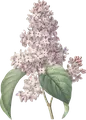




Illustration: Pierre-Joseph Redouté, Choix des plus belles fleurs (1827), plate 86. Public domain.